Friday, May 29, 2015

Ready, Set, Burn!

I haven't been updating much lately. So that's no good.
Getting back into my bad, inconsistent habits.
But we all understand it's that time of the semester where uni workload just gets really out of hand.
And I've got another month of exams coming up, so do expect an another month of inactivity.
But I thought I'd share a little update before start studying for finals a.k.a this is my current method of procrastinating.
I was wondering on whether I should write about something personal or something educational and science-y. In the end, I couldn't make up my mind so I thought 'why not do both!'.
I'll just write about a topic that I find deeply fascinating.

So back in my first year, I did a earth science introductory unit.
In that unit, you had to contribute to a glossary in order to earn participation marks.
It was really hard finding original terms to contribute, what with 500 other students trying to get as many entries in as possible.
I looked around in my textbook for ideas. Eventually, I encountered something interesting called the Clathrate Gun Hypothesis.
I did a bit of reading up on it and thought it was quite interesting.
But first of all, I think I need to explain the concept of 'feedback'.

Feedback is simply how one factor affects another.
For example, eating more food causes you to become fuller.
You've got a feedback mechanism between eating food and being full.
We can classify these feedbacks into two categories: positive and negative.
In negative feedbacks, the process involved will self-regulate itself depending on the state of its components.
Now I know that sounds really confusing (and I really need to work on minimising jargons used), but an example would make this clearer.
So, if you increase the amount of food you eat, your stomach will be filled with more food.
However, when there is more food in your stomach, you will feel full and tend to reduce the amount of food you eat.
In this cycle, you are self-regulating the process, where the rate you eat food will vary depending on the situation.
Another example would be the production line in a factory;
if you've made lots of products, you can afford to tell your employees to slow down.
But if sales are doing great and you're running out of stock, you can tell your employees to speed up production (P.S. this might put extra strain on employees though).
These aren't really good examples, but it gives you a gist of what negative feedbacks are.
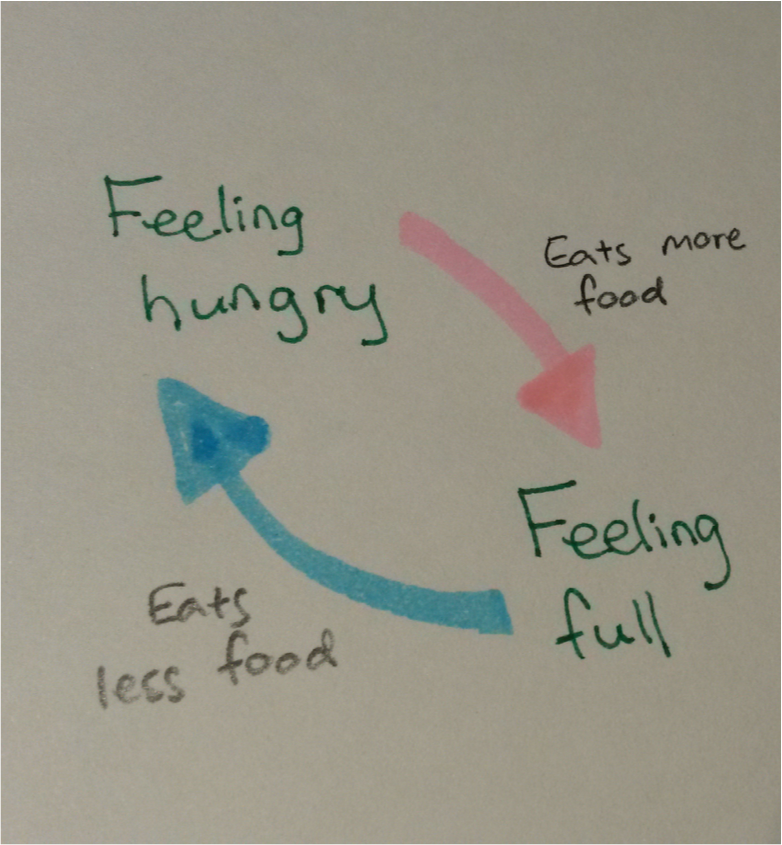
Figure 1. A typical negative feedback loop, where the processes self-regulate. Eating rates are determined by the state the system is currently in (hungry or full). Red arrows indicate an increase in forcing rates, while blue arrows indicate an decrease in forcing rates.

Now for the more confusing (but epic) positive feedbacks.
Positive feedbacks are where a bunch of processes repeats itself in a never-ending cycle.
But as the process repeats itself, the system gets bigger and bigger and bigger....
Until KABOOM! Well, at least in most cases.
Positive feedbacks are really interesting because lots of processes experience positive feedbacks in natural systems.
Of course, this means if we leave to alone for long enough, it'll go haywire and wreck havoc!
Okay, example time! I like this one because its simple (source: Wikipedia).
A farmer is handling his flock of sheep. He does his job well, but is still inexperienced.
All of a sudden, about 5 sheep strays from the herd. The farmer panics! He doesn't know what to do.
While he's panicking, another 5 sheep followed the stray.
The farmer proceeds to panic even further! His judgement is clouded while in this panicky state.
His managing skills decline as a result and more sheep start running amok!
This continues on in a cycle where the farmer panics more and more, while more and more sheep go rampaging.
Let's say, this continues until the farmer gets so worried that he faints.
That's what a positive feedback does. Inflates itself till it bursts!
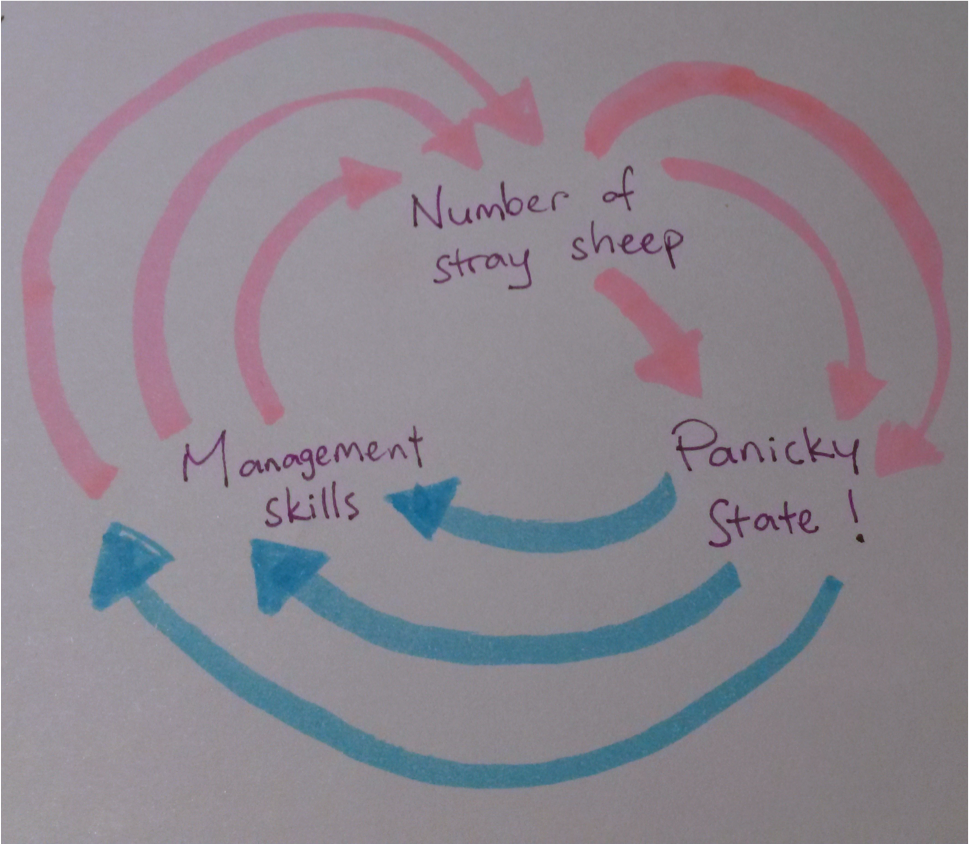
Figure 2. A typical positive feedback loop, involving sheep running amok and its effect on an inexperienced farmer. The higher number of stray sheep, the more panicky the farmer becomes and the less effective his management skills are. As a result, more and more sheep run amok. This loop is repeated several times, where the effects are amplified with each loop until the system somehow collapses. Red arrows indicate an increase in forcing rates, while blue arrows indicate an decrease in forcing rates. 


The Clathrate Gun
Okay, now that I've used some relatively simple examples for positive and negative feedbacks, I'll give a real example now for positive feedback loops.
Just because I think it's way more interesting (and its consequences are worth noting).
Behold! The clathrate-gun hypothesis!
I say hypothesis because it hasn't been proven yet. But it was briefly mentioned in my textbook back in first year. And I thought it was pretty cool!
So this hypothesis talks about methane hydrates - a ice-crystal-like structure lying around in the bottom of the deep ocean.
Methane hydrates contain...methane, obviously.
And let's not forget, methane is a greenhouse gas, several times stronger than our normal carbon dioxide in fact!
So, why do we get methane hydrates only on deep ocean floors? Why not on land or on shallow water?
The answer is because these hydrates can only exist when pressure is high and temperature is low.
Because of these required conditions, the ocean floor is the perfect place for it to form.
But what if we mess up these conditions a little? Reduce the pressure or increase the temperature a bit?
These hydrates will dissolve and release methane gas into the ocean.
But what's really scary is the amount of methane gas these hydrates can pack - every 1m3 of hydrate is capable of releasing 164m3 of methane gas! That's a lot of gas!

Back to modern days, humans have really made quite a commotion.
Climate change is a big thing right now, with the atmosphere and ocean getting warmer.
So, if we increase the temperature of the ocean, those methane hydrates won't have a cozy environment to exist anymore.
A very small chunk of it will eventually dissolve and release large amounts of methane, which will travel to the atmosphere.
Remember how methane is a much stronger gas than carbon dioxide? Its effects are going to be more prominent!
And what happens with more greenhouse gas in the atmosphere? More warming!
More warming causes more hydrates to dissolve, releasing even more methane gas into the atmosphere!
The cycle continues until all the hydrates are gone.
But its not like we'll be there to see it, since so much methane in the atmosphere would have killed most organisms!
That's a positive feedback at play right there.
A small change can make a system repeat itself, getting bigger until it cannot sustain itself anymore.

Interestingly, notice how the hydrates were living peacefully on ocean floors until the fire nation attacked ocean temperatures rose to a point that they can't handle anymore?
These hydrates wouldn't end up in a positive feedback loop if it weren't for the initial change in ocean conditions (the temperature increase).
And that's why this planet is still in one piece even though many systems have positive feedback natures.
We haven't triggered these positive feedbacks yet. But when we do, even a small change can cause the effects to become magnified out of proportion, as seen with the hydrates!
So, why don't we make a move to reduce greenhouse gas emissions before it's too late.
Who knows when we'll kickstart a positive feedback loop and start a hopeless countdown to ruin for future generations.
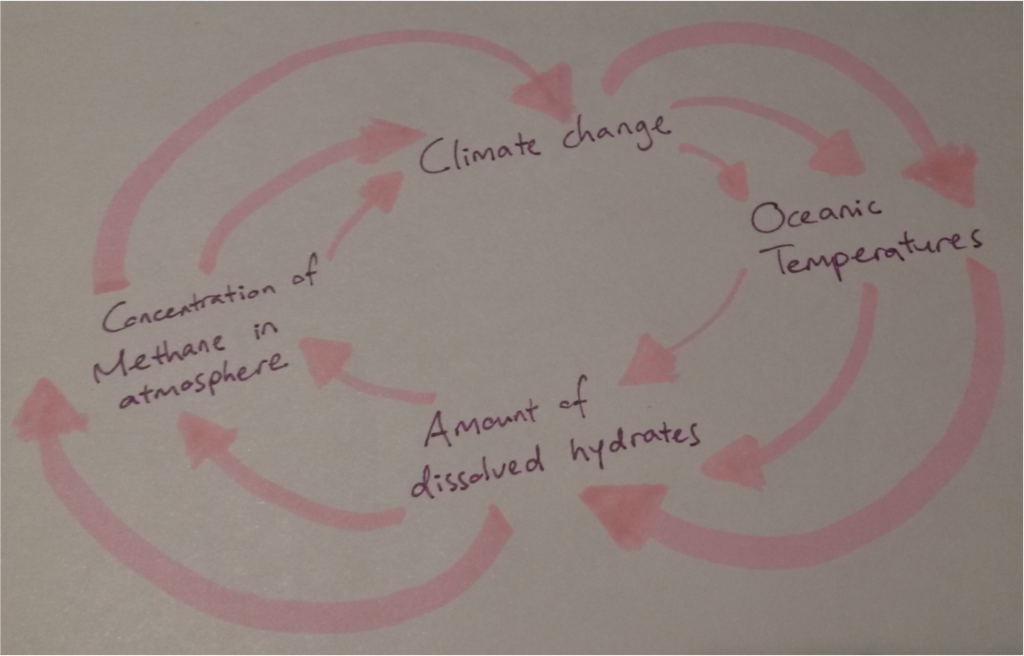
Figure 3. A positive feedback loop, illustrating the basic mechanisms of the Clathrate-Gun Hypothesis. In order to 'initiate' the feedback loop, a small forcing must be applied. In this example, anthropogenic climate change applies a forcing on oceanic temperature and increases it. This causes hydrates to dissolve, which releases high concentrations of methane gas into the atmosphere. As a greenhouse gas, methane promotes climate change, which further increases oceanic temperatures. The loop continues. Red arrows indicate an increase in forcing rates.

As a closing note, I need to emphasise that this is a hypothesis.
It has not been proven, and the data obtained are showing mixed messages.
The topic is quite controversial in its field but nevertheless, I find it really cool and a concept that's easy to understand.
Although evidence on this is still mounting, we need to remain vigilant on the carbon footprint we leave on the planet.
Lastly, in case anyone finds this interesting, I've attached a list of relevant articles for you to check out (if you have trouble accessing them, just pop me an email):


  1. Dickens, GR 2003, 'A methane trigger for rapid warming?', Science, vol. 299, no. 5609, pp. 1017-1017. (Link)
  2. Kennett, JP 2003, Methane hydrates in Quaternary climate change: The clathrate gun hypothesis, American Geophysical Union. (Link; the original book, paywalled)
  3. Lifland, J 2002, 'The Bookshelf: Methane hydrates in Quaternary climate change, The clathrate gun hypothesis', EOS Transactions, vol. 83, p. 513. (Link; paywalled, email me if interested)


Listening to Verge - Owl City

Halfway through,
TK
Read More

Friday, May 1, 2015

Transitioning

Transitioning in life can be hard at times.
I remember getting on my knees and begging my mum and playschool teacher when I overheard them discussing plans for me to attend kindergarten the following year.
Change is scary. Always was for me.
When I moved on to kindergarten. When I moved on to primary school. Then, secondary. And now, university.
You know there's nothing to be afraid of. You tell yourself that.
But your body doesn't listen. You heart rate skyrockets, you hear weird grumbling sounds from your tracts. Your hands get all clammy.
Uncertainty can certainly make us anxious.
We don't know what to expect.
It keeps us hanging. It keeps us guessing.

Thankfully for us, there are people and special programs that help us with our transitions.
Isn't that why every school, uni or workplace has an orientation program for newcomers?
Sometimes, they're done well. Sometimes, you constantly question the way the program is conducted.
We've all been there.
For my transition to uni, I was thankful enough to be accepted into UniSkills - a first-year transitory program at UWA.
The university goes out of its way to host a whole week of activities for orientation. All students are also assigned to a mentor.
And yet, I feel that this is one of those times where I tell myself "this really isn't effective".
UniSkills was, however, incredibly useful to me.
The program is open to anyone who's facing difficulty transitioning into life at uni.
International students, regional students, mature-aged students, you name it!
The first event I attended was a pre-orientation camp at uni.
That was extremely daunting. I didn't know anyone.
But, I walked away having loads of fun (mostly 'cause we got to stay at the uni colleges for free).
Most of the people I've met and my closest friends came from that program.
They host monthly events for members to meet up; and face it, who can ever say no to free cheesy toasties!
And even today (I'm halfway through my second year), I still run into people who've done the program.

Naturally, the program lets go of students when they're done with their first year.
An opportunity is given to any/all students who apply to volunteer for the program.
I applied, obviously. The pre-orientation was really fun and it's literally my only chance to stay over at the college (did I tell you they had an ice-cream machine at the cafeteria!?).
So yes, I wanted to retain membership for personal and altruistic reasons.
Very unfortunately, I wasn't able to enrol myself for the program this year because I wasn't in the country at the time of the camp.
I submitted an application as a general volunteer, hoping for the chance to try again next year.
I never got a reply...

I had a friend who got to attend the camp as a volunteer.
So in a way, I could still find out "what the hell was going on" and "what happened to my application".
As expected, everyone had fun at the camp.
And then, everything went quiet.
There was an (unusually long) period of inactivity.
All of a sudden, the news was out. UniSkills is history.
That came out out of nowhere.
The volunteers were invited to a lunch and that was it.
The students/members were not informed of this.
I was slightly outraged. But I'm glad to hear that I wasn't the only one.
Remember that lunch? It wasn't a lunch. It was a riot.
No one was happy about this.
Because of my connections, I managed to get my hands on some rather 'juicy' information.
It pains me to see one of the few useful transition programs get axed by the uni.
It's sad to think that I'll never go back to that camp.
I'll never get my own college bedroom again.
I won't get to stuff my face with yummy college food and play with that ice-cream machine anymore.

As expected, only volunteers know of the program's cancellation.
Students were kept in the dark.
Those who applied to volunteer for anything other than the camp were not entertained. That includes me, of course.
First-year students who got into the program this year will probably be ignored for the rest of the year.
Everything regarding the program was just put on a bus.
The application forms are still open. UniSkills is still the go-to transitionary program on orientation booklets. No announcements were made about the program.
It frustrates me. How can they just turn such a successful and influential program off?
The worst part?
Should the program reopen, my application is likely to have been trashed along with others.
Only the volunteers at the time of the program's closure will be notified.
Even if they come back next year, I still won't be able to eat from that ice-cream machine.

With all this chaos was happening, I was still eager to help out.
If I couldn't help out in the (nonexistent) UniSkills, I'll just have to make due with something else.
So I applied for the UniMentor program.
UniMentor allocates a student to several first-years during orientation to help with transition.
Needless to say, it wasn't very helpful.
Either the mentors were poorly trained and just not interested;
or the amount of students allocated to a single mentor made it unfeasible to feel included.
There was just no room for interactions.
Most people don't actually use the program. People meet their mentor during orientation and that's it.
They don't reply to the mentor's emails. They don't need the mentor anymore.
What a waste of resources!
And yet, when I went for my interview, I was informed that they had more funds and resources to work with now.
Hmmm, I wonder where those "funds" came from?
It is understandable that the program is trying to improve itself, but I am just acting bitter.
I do not hate other programs. I do not hate the student service department.
I am merely whining around like a 13-year old who can't get what he wants.
I pay my respects to the program.
And if it does come back one day, I hope I can still be a part of it.


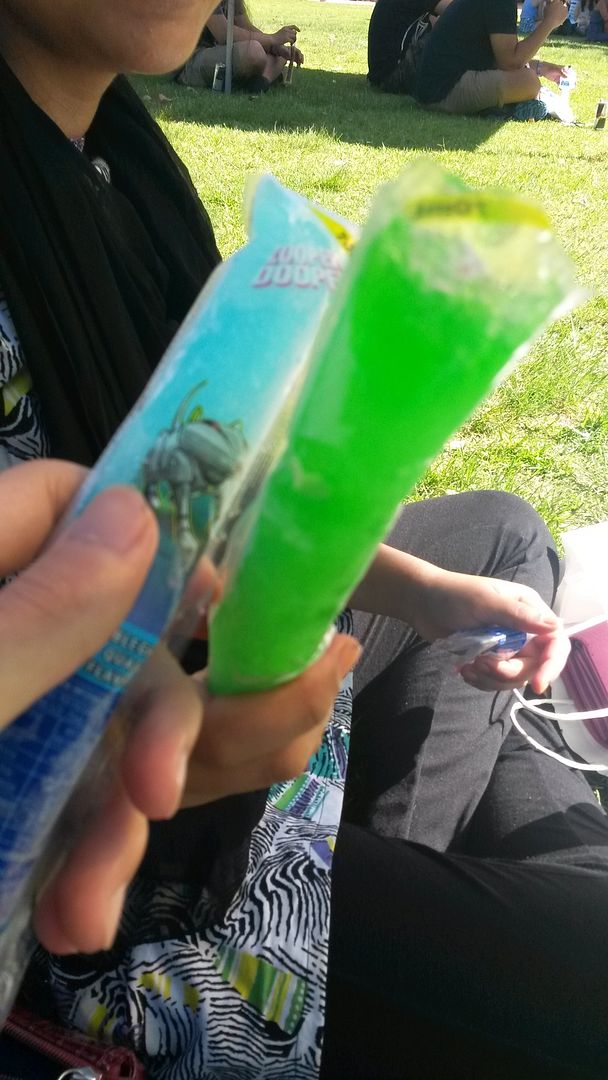
Figure 1. Throwback to last year's orientation week. It was the last day.  After (foolishly) joining tons of clubs, we sat down on Oak Lawn to relax. Enjoyed several free 'popsicle' sticks while enjoying a live band performance. And that's when I told myself 'Hey, maybe uni wouldn't be so bad after all!'. All thanks to UniSkills, of course. It all started there.


Listening to Fine By Me - Andy Grammer

Loyalty,
TK
Read More

Monday, April 20, 2015

1.week

Apologies for not keeping up with this blog as often as I'd like!
Unlike most high schools and universities in WA, my uni's midsem break only lasts a week.
So while everyone is still out partying, we UWA students are already back to that all-so-familiar lecture theatre and dodgy tutorial rooms.
It's quite common to hear students telling you they use their midsem breaks to catch up on lectures and assignments.
And they do mean it, really.
But something always gets in the way. Namely, procrastination.
Or in this semester's case, episode leaks of the fifth season of Game of Thrones.
And it isn't surprising how spending 5 hours watching those episodes can escalate to spending an entire week binge-watching on Netflix!

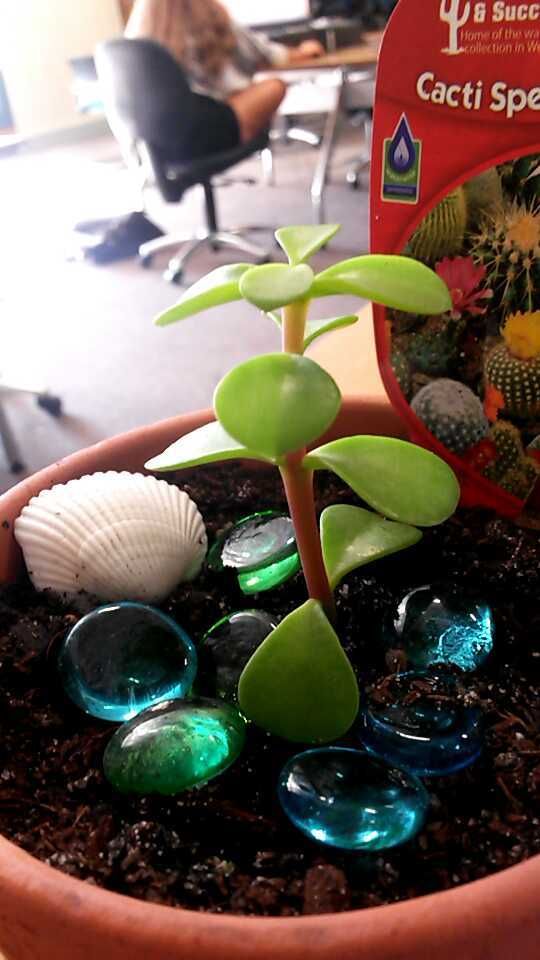
Figure 1. A cute little succulent plant I got from this year's EnviroFest.
I've always wanted a rock as a pet, but this is so much better. Its low-maintanence AND alive. Those blue and green gems are also irresistible! I keep it in my room now and water it weekly (because I'm just that busy forgetful).

Fortunately for me, I have not fell into the dark, inescapable world of TV-shows.
Don't get me wrong. I get hooked to things really easily.
But as long as I stay away from them, I should be relatively safe. Right? RIGHT!?
People might say I'm missing out but I'm not.
A perk of being hooked to things easily is that I'm also easily entertained.
YES, I admit I liked writing up my paper for a bunch of plants competing for nutrients!
As a result, midsem breaks usually find me in the library at uni. Churning away on a computer.
Although it has never happened to me yet, I think people around me are somewhat irritated by my keyboarding ethics (I type really loudly).
Fortunately for all library-goers, I wasn't at the uni library (much) this semester.

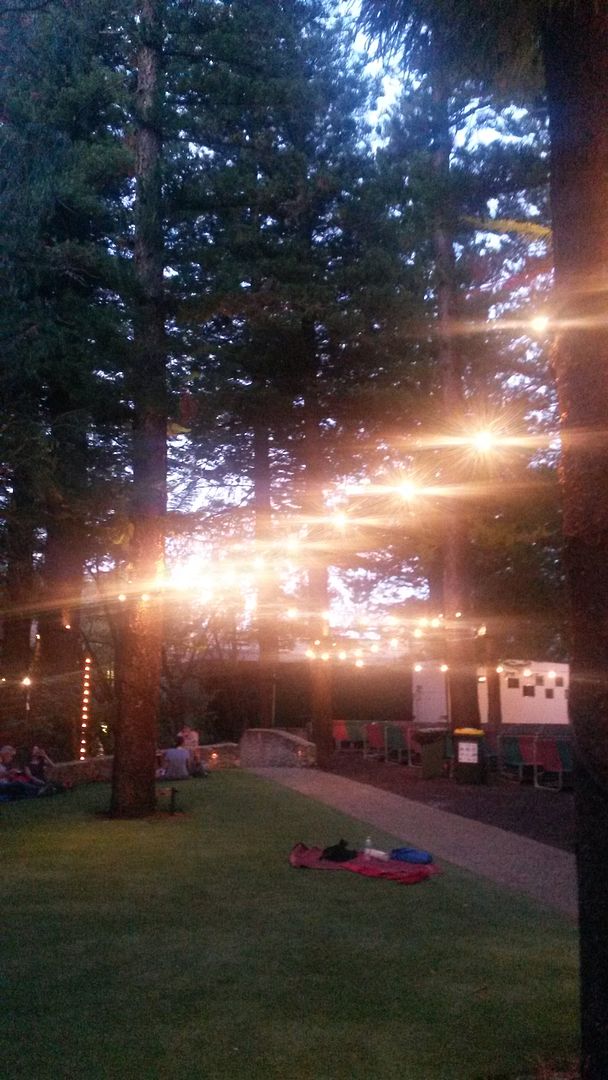
Figure 2. Over the Easter weekend, I also went for a film at my uni's open cinema, Somerville Auditorium.
The auditorium looked great; lighted up bright and surrounded by tall trees. And the pizza they sold was to die for!
It was my second time watching a film there. The films were curated as part of the Perth International Arts Festival.
My friend wanted to catch a German film called 'Phoenix'.

Earlier this year/late last year, I had decided to become more active and not type so much.
And that's how I got into volunteering TONS, all of which coincided with my break.
Somehow, I had the 'brilliant' idea to do volunteering work by day and work on assignments by night.
Well, you'll be happy to know that, just like 80% of uni students, assignments were neglected throughout the break!
Having the long Easter weekend prior to the break was also...not-so-ideal, because all public libraries were closed.
But by the end of the week, I might've been completely exhausted, with assignments still stacked in front of me; but it was some really great experience and I'm really appreciative of it.
tl;dr I'm happy because I procrastinated by volunteering.

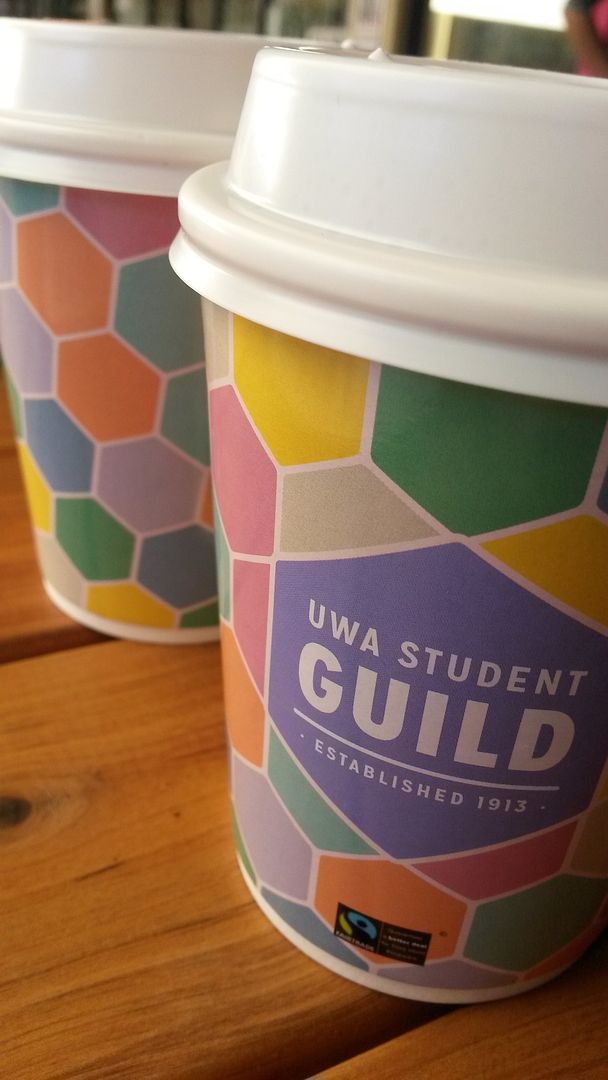
Figure 3. More pictures of my daily coffee fix. Double it this time! Actually, it's not real coffee; but chai latte.
Fun fact: I seem to get some weird gastronomic activity going on after I drink coffee so it's best for me to stick to lattes from now on. Chai's perfect as it tastes exotic and spicy and not bitter. I clearly have an obsession going on with it! Unfortunately, chai lattes are also sold at a higher price at cafes (and they don't even use natural ingredients!).

Over the course of the week, I was at the citizen science project office, MicroBlitz.
Helping my manager send out loads of kits to MicroBlitzers (you should sign up too!).
I managed to eavesdrop on the agendas my manager was working on, which is great if I ever wanted to become more involved with the project.

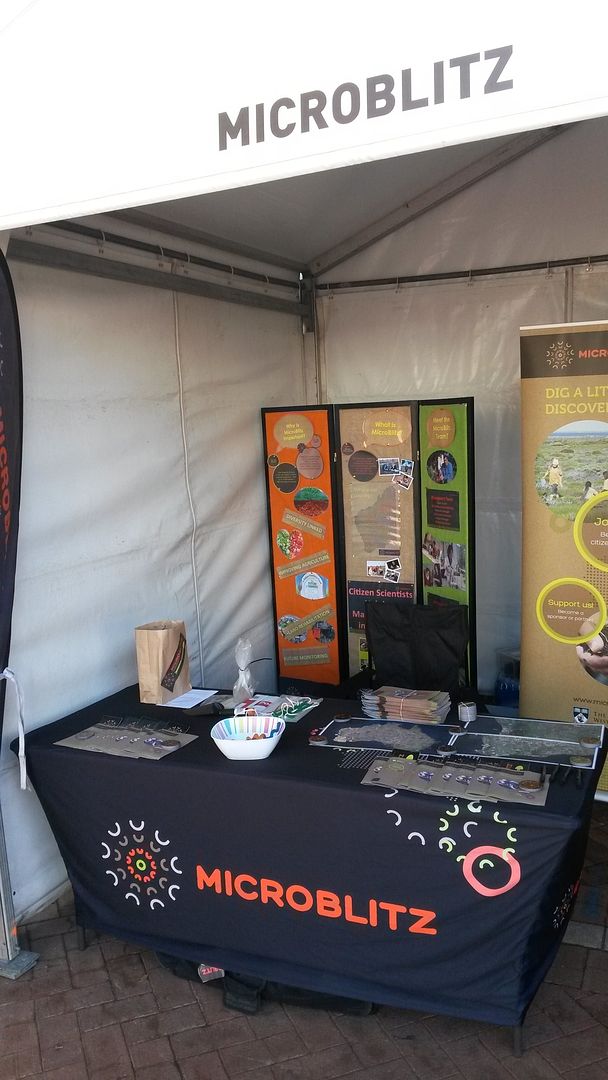
Figure 4. A few weeks ago, MicroBlitz made an appearance at the local Caravan and Camping Show.
Of course, I was there to volunteer a bit of my time over the weekend. Unfortunately, we didn't get a very good spot.
But still, no one could escape our trademark 'lure them in with lollies' trick (which is what Australian call gummy candy. Weird...). Doing outreach work like these might eventually help me develop some better communication skills.
Plus, it's a great opportunity to get to know some of the other volunteers.

The next day, I joined a bunch of other volunteers to do some building sustainability audits with Sustainable Energy Now.
A big reason why I did this was because environmental consultancy firms handle lots of these 'audits'.
I just had to find out for myself what these things were.
Auditing was pretty mundane but people tend to find ways to keep themselves entertained.
For me, it was spotting cool features in the faculty offices, getting myself acquainted with the building's architecture AND having a glimpse at the different offices our academics have.
I was definitely not disappointed with that last part.
Every room was different. And I'd say it reflects the occupant really well.
One of the room was full of books with only a single trail leading to their desk (also filled with books).
We also got academics with clothes, weird-smelling rooms, coffee machines (a big NO for energy efficiency, people!) and vintage clock collections (don't ask).
Having to go door-to-door asking academics if we could audit their rooms also gave me a different vibe.
I wasn't going in as a student begging for more marks on an assignment.
Maybe it's the way we communicated. But somehow, I felt like we were a bit more like equals in that situation.
Plus, we got free pizza and fair-trade dark chocolates.

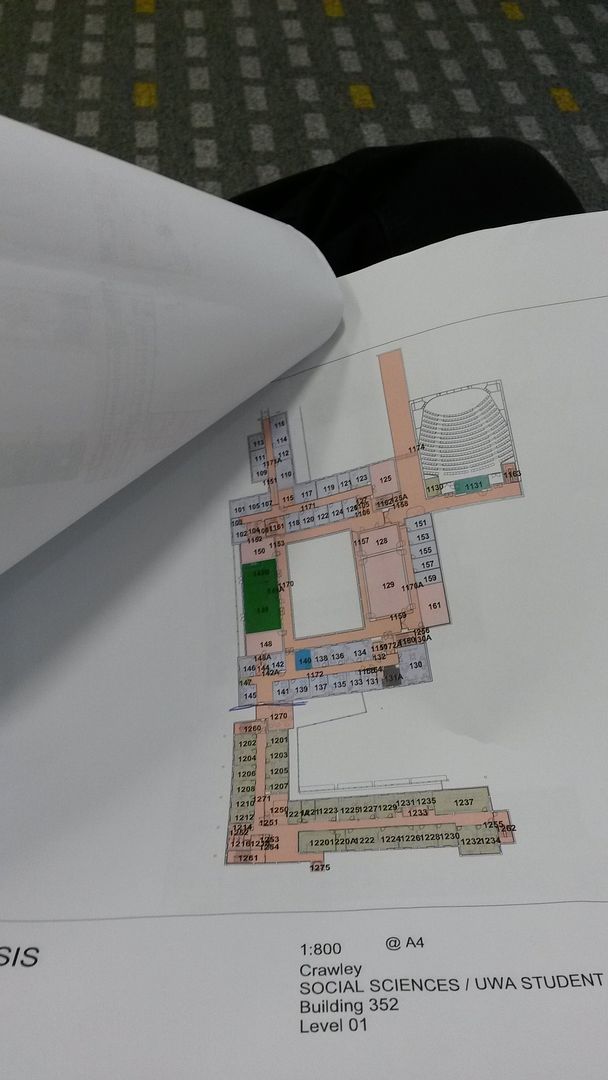
Figure 5. A detailed map of the Social Science Building I got from SEN UWA to aid me in my auditing endeavours!
Unfortunately for us, most of the academics weren't in their office that day so we had the privilege of breaking in, looking at their stuff and sitting on their chairs. Contrary to what the map shows, the building is actually humongous; or really confusing, to say the least. Although we were only assigned to do half the building (and other major advantages), our group finished last!

On Thursday and Friday, I did some hands-on work with a PhD student from the School of Plant Biology.
His name's Kenny and he's doing research on plant-soil interactions, with a particular focus on nitrogen-fixing plants.
It sounds cool and all, but I didn't really get to do much.
A key thing to do in mind while doing research is that things are incredibly repetitive.
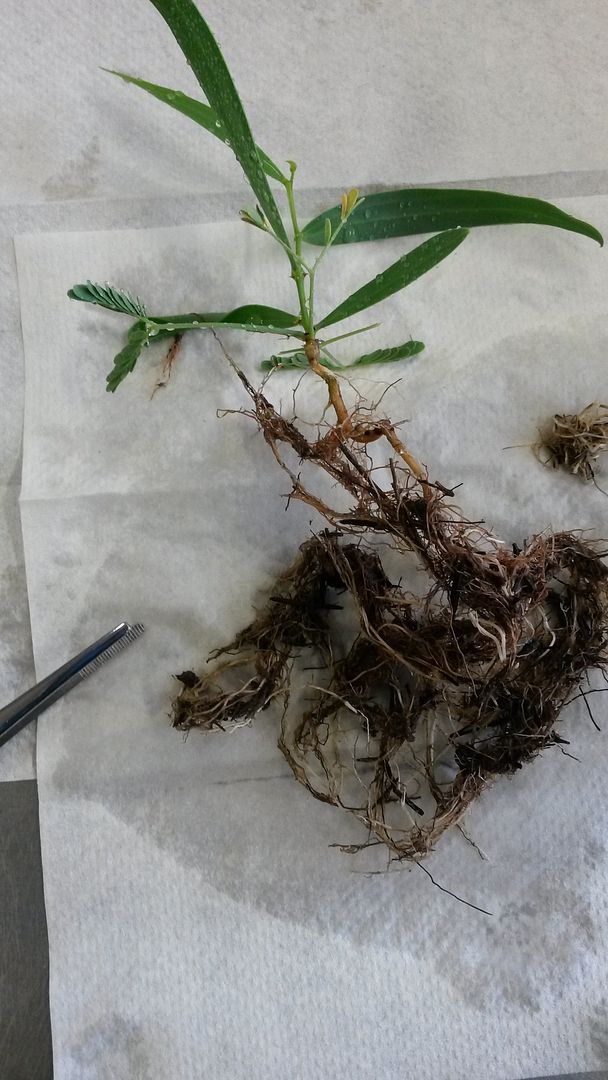
My job was to unload plants from their pots, wash the soil away, then remove the finer organic material (debris, twigs etc) from the roots.
And mind you, those are some really tangled up roots.
A single plant could take up to 30 minutes, depending on the soil conditions and species.
For two whole days, I've basically stuck to removing stuff from the roots.
It really hurts my eyes and my fingers get really tired from holding forceps all day long.
I think that might've been the closest I've ever been to experiencing Repetitive Strain Injury.
Don't try it!
But Kenny's great and really easy to talk to (I'm not, because I'm too busy trying not to screw up).
I got some really good tips and insight into the world of research.
Hopefully, all this networking will end up with doing some real lab-work, with fancy gizmos and whatnot.
Then again, even fancy gizmos get boring when you have to repeat a process a hundred times!

Figure 6. My volunteering with Kenny had me remove debris and other organic material from plant roots.
He was working with several species of plants, growing in different soil conditions. Depending on these two factors,
the root morphology might go from fairly clean to nightmarish-to-work-on levels.
To be honest, I'm not too quite sure what I'm doing or whether I'm even doing an OK job. Geez, I wouldn't want to be the reason his dataset looks out of whack! But I'm sure someone'll stop me if I'm not doing something right.
Did I mention I had to listen to Triple J for two whole days while working in the greenhouse? Pure torture.
I'm sorry, but they really aren't my cup of tea. 

I think that sums up what I did over the break.
I still remember what I was doing exactly a year from now.
My whole break was spent at the library writing up two papers.
I guess as you go through uni, you learn how to do your work more efficiently, like on the night before its due.
Because that's me right now! Like I said before, I was still facing piles of assignments at the end of the break.
Go me!
But totally no regrets.
It was great not being looked up in a library trying to vomit words for my reports.


Listening to The Days - Fast Forward Music (cover)

Back to school,
TK
Read More

Thursday, April 2, 2015

Weather vs Climate

The question remains: If we're crap at accurately predicting weather for more than a week into the future, why are climate scientists so sure of their models' results?

The answer can be simple. And it can be extremely complicated.
So complicated that I'm not even sure if I'm sharing science or pseudo-science.
But I shall try my best to explain.
Climate does not equal weather.
In a way (but not so in a way), weather is a part of climate.
I heard a really useful analogy once (and hopefully my brain made the right connections).
Imagine an empty swimming pool.
You're dumping loads of water into the pool.
You measure how big the pool is; how much water you need; how quickly is the pool filling up; what would happen if you poured even more water in?
That's climate.
Then you see how many tiny ripples are produced; how many bubbles are produced; how does the water splash around?
That's weather.
In climate, you look at things on a larger, more macro scale.
But you really need to focus and look real close when it comes to weather.
That's why we're more confident at looking at the big picture (climate) and not sweating the little details (weather).
To be more specific, weather is everything happening in the atmosphere at any moment.
Climate is just a statistical average of the climate over a long long period of time (Ie: what's the average temperature of 2014?).

A lot of times (at least for me), I see the results of climate models in the form of temperature.
"Ohhhh if we keep emitting carbon dioxide, the temperature will increase by x amount."
Why don't they ever give us something more "weather forecast-y"? Like air circulation?
That's because air movement relies on the laws of Dynamics, something we don't fully understand yet.
However, what we do understand is the Law of Thermodynamics.
That's why we're more confident in predicting temperature, of all the variables to look at.
That's definitely a bonus.
We use what we know as an indicator of future climate, and rely less on something we're unsure of.
At least then we can call our results 'credible' and don't risk getting any 'risky' predictions.

Another way to look at this is through the problems that arise from predicting weather and climate.
As I've mentioned previously, after predicting at 5-7 days' worth of weather, Mr. Chaos Theory kicks in and we get predictions that might be very different from what will actually happen.
We can also call this 'high sensitivity to initial values'.
Our tools aren't accurate enough to provide measurements that will minimise this sensitivity.
If we have more accurate tools, maybe we could predict a month into the future before Mr. Chaos Theory screws us up.
This applies to weather, and not climate (according to some).
In the climate system, it's believed that if we create a realistic model environment, everything will 'work out in the end'.
At some point, no matter how crazy the system goes, it will reach an equilibrium, a stable state.
This realistic model environment includes things such as concentration of greenhouse gas in the atmosphere, amount of solar radiation we're receiving, the flow of air currents in the atmosphere etc.
If those values (we call them 'boundaries') are set to the same as our Earth, we can get a pretty accurate reading on things.
So weather prediction is a 'initial value' problem.
And climate prediction is a 'boundary value' problem.
These sort of problems are really opinion-driven.
Some people think that climate modelling is purely a 'boundary' problem.
But others, like my wonderful lecturer, think that it's a 'boundary' AND 'initial value' problem.
Geez, I hope I explained that well enough (and true enough).

It would be depressing to end this 'trilogy' on an uncertain note.
So I'll write about a simple, yet fairly effective solution scientists have developed.
It's called "Ensemble Modelling".
What you do is basically, run several models at the same time.
But with each of them, you use some slight different initial values.
At the end of it, you can see how the models reacted differently to the similar inputs.
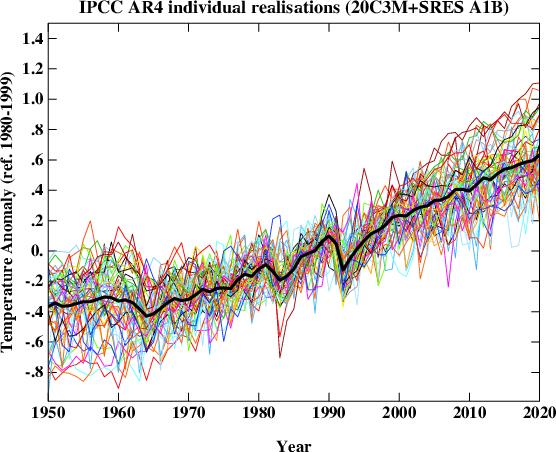
If you graph that up, you'll get a range of possible outcomes (Figure 1).
And that's really helpful, because replicating the modelling run several times gives a sense of consistency to our results.
Depending on how you use ensembles, you can either test to see how consistent your models are, compared to others (by putting the same inputs in and observing what comes out); or how slight changes in input values can change the results (by using the same model but with slightly different inputs).
This simple, yet computationally mind-blowing, technique has enabled us to become more confident in our forecasting and it gives us a rough idea of how large our uncertainties are.
Thanks to this, we've been able to do weather predictions up to 10-14 days into the future (instead of 5-7).
This is only a small step in creating reliable climate models, but our innovations won't stop there.
We'll continue developing better techniques and stronger supercomputers.
And one day, we might actually be able to plan our fishing trips months in advance.

Figure 1. The model output from a ensemble modelling run. The different-coloured lines represent different climate models used in this process. Although every model produced different results, once we overlap them, we can actually observe a rough area of what the possible climate might be. After that, they calculate the mean of all these results (the thick black line). Ensembles also tell us how big our uncertainty is. The wider the coloured-band areas are, the more uncertain these projections will be. Image taken from RealClimate

And that concludes this 3-part blog post about my assignment: climate modelling.
Funny thing is, I've already submitted my assignment a week ago before writing this.
Let's just say, by the end of the week I can't be stuffed with writing a good essay anymore.
Besides, it's only worth 10%.
Now I have another paper to write. But I probably won't blog about it.
Just because it looks incredibly dry and boring.
Plus, I wouldn't know how to blog about it even if I tried.
Good news is, I'm already halfway through the semester.
Just a little (actually 50%) more!


Listening to Hey Ya! - Glee Cast

Back to Writing,
TK


Read More

Saturday, March 21, 2015

Messy Models

Hello and welcome to the continuation of my previous blog post: She's a Modeller.
If you haven't read that and you're not doing a PhD in atmospheric physics, you will need to in order to understand what I'm gonna say today.
Climat modelling sounds pretty cool, doesn't it?
The very notion of us being able to predict the weather is just mind-shattering.
BUT, there's always a "but".
Climate models are imperfect, and we will never be able to create a carbon copy of our Earth.
As a matter of fact, even if we get the perfect climate model, we still wouldn't be able predict the weather perfectly.
There are three big problems in climate modelling, two of them are kinda related and the last one is the absolute FATHER of "Why-You-Suck-At-Climate-Modelling".

I've already talked about discretisation last week (splitting the globe up into tiny boxes).
Since our computers need to calculate the atmospheric conditions in each box, one at a time, this can be extremely time-consuming.
But we are always trying to get those boxes in higher resolutions (smaller boxes) so that the Earth looks more "smooth" and less "blocky" (Figure 1).
This creates a sort of paradox: we want more (smaller) boxes, but that'll mean it takes even longer for our computers to finish calculating the whole thing.
So, as much as want to, we can't make those boxes too small.
And big boxes have big consequences!
So that's our first dilemma.

Figure 1. As supercomputer processing speeds get faster, we can afford to increase the resolution of our model. That means we can have more, smaller boxes; rather than a few big, bulky ones. This enables us to make a more accurate map of the Earth as well as areas of elevations (such as moutains).
This makes our model more realistic and Earth-like. Taken from Climate Modelling 101.

Now, on to our second problem.
If we have big boxes (more than 100 km wide), we can't represent smaller processes.
CLOUDS are an excellent example of that. We don't know whether they help reduce or induce the greenhouse effect.
But we do know they play a major role in Earth's climate.
But we don't see a full 100 km cloud do we?
That's the problem. We can't make a whole box full of clouds because that will be unrealistic and create horrible climate predictions for us.
Not only that, but we don't even know what its function is (greenhouse effect - yay or nay?).
So us scientists need to rely on (if you haven't guessed it yet) MATHS to try to represent the clouds with an mathematical equation.
This process is called parameterisation.
Don't even try pronouncing it, even I can't spell it right.
Even with parameterisation, we can't get it exactly right, simply because... we don't actually know what clouds do, exactly.
That is a major flaw. We are trying to replicate something we know very little about.
You know, normally, climate models can help advance our understanding of these clouds.
But they're just TOO.DAMN.SMALL.
And if we make our boxes small enough (around 1 km?) to realistically portray these clouds, it'll take infinity years to finish our modelling due to the sheer amount of boxes we get.
See where I'm getting at here?
Discretisation and parameterisation are both limitations to our climate model.
I hope I've made it all understandable up till this point.
The final problem will be a whole lot technical, and wayyyy more interesting.
I promise!


THE REASON YOU SUCK AT MODELLING: CHAOS

Okay, so this is our final challenge, AND our biggest one.
Unlike discretisation and parameterisation, this is not a "technical" problem.
This is all about that bass The Chaos Theory.
Sounds cool, huh?
What the Chaos Theory says is that if you put some numbers (temperature, pressure etc) into a model that's complex, non-linear and dynamic (basically, our atmosphere system), bad things happen.
The guy who came up with the Chaos Theory, Edward Lorenz was playing around with a similar model back in the 1960s.
He put a few numbers in and let the system run for a while. Came back and recorded his results.
Then, he did the test again, only this time, he rounded off his numbers before typing them into the system.
When he came back from his coffee, the results were INSANELY (much emphasis) different from his first test.
So, this is because the system is chaotic. We can't predict what goes on with it.
Not only that, we have systematic errors going on with our measurements.
Some measuring devices can only give you a certain amount of accuracy a.k.a decimal places, where as perfect modelling might need you to be really accurate and have 20 decimals places!
(28.3950358395030128394 degrees celsius, anyone?)
And what if I don't have a 20-decimal thermometer?
Well then, sucks to be you.
Your predicted weather will look nothing like the actual weather.
Therefore, modelling and predicting the climate is nigh impossible and I've just wasted your time in these two blog posts. =)
Thank you very much.

Figure 2. The Chaos Theory is also popular known as the Butterfly Effect, where a butterfly can flap its wings in Brazil and that flap will cause a cyclone to appear in Texas two years later. The butterfly's flap symbolises the small changes in measurements we input into our model. Whether it flapped its wings or not can make all the difference in a cyclone appearing (symbolising tiny changes in the beginning can result in massive differences after long periods). Taken from Mr. Lovenstein.

I'm just trolling.
The Chaos Theory only kicks in when you make the model predict the climate over a long period of time.
Right now, we can predict up to 5-7 days accurately.
10-14 days if we're really pushing it.
But after that, you get the system going haywire!
THAT is the reason why you only get weather forecasts a week in advance.
Any more ahead and the weather station can't guarantee you whether the predictions are true.
But doesn't this sound a little contradictory?
We admit that we can't predict the weather past 2 weeks tops.
And yet we claim to be able to predict how Earth surface temperature will go up by *insert number* degrees in 100 years if we keep emitting greenhouse gases.
So... what's the deal with that?

Well, you'll just have to stick around for the final part of this trilogy!
*Whoopie!*


Listening to Father Figure - Glee Cast


Still modelling,
TK
Read More

Sunday, March 15, 2015

She's a Modeller

Over the course of my (short and to-be-completed) undergraduate studies, I've had the pleasure of meeting some really great scientists (No, I don't stalk my lecturers... well, actually... nevermind).
The point is, I've met quite a few climate scientists over the year.
Surprisingly (or not), they are all female. 
So, I guess there's a correlation between being female and studying the most controversial field in science (next to GM crops and vaccination).

Anyway, as a student, we are kinda expected to be a "Jack of all trades, Master of none".
That's why I have to study Earth Science, Communications, Biology, Ecology, Genetics, Statistics, Biodiversity Conservation etc in my degree. 
And this semester, it's my turn to try and tackle a unit called "The Climate System".
At the beginning, I was a little excited at the prospect of finally studying what my "scientist acquaintances" are doing/did in their PhD: Climate.
I guess I can finally understand the reasons they were interested in looking at the global climate.
My bubble sorta popped at my first lecture, when I realised the climate system, is mostly just about the atmosphere, which I do not particularly like. 
However, many students have done this and have lived to tell the tale, so I shall persevere.

For our first assignment, we had to write an essay... with some rather ambiguous instructions.
We could pick to write about one of two topics (Wow, is "two" going to be a recurring theme again in this post?):
  1. If weather forecasts can only predict one week into the future, how can climate scientists predict the climate for the next 50 to 100 years!?
  2. Write about the El Nino Southern Oscillation (ENSO) and bla bla bla...

People who hear me whine everyday would know how much I hate ENSO.
And therefore, I will not write about ENSO.
Which leaves with Climate Modelling *yay*.
To help me better structure my essay, I will once again blog about my assignment in order to gain a better understanding of...the structure.

So what is climate modelling?
It's (at its most basic form) human's attempt to create a virtual Earth.
We do this by applying mathematical equations that describe the laws and forces of nature.
So you'll get an equation for the conservation of energy, an equation of the laws of thermodynamics etc.
And so through the use of maths (UGH...), we can create/model the Earth's atmosphere, which is the biggest player in the climate system.
However, the atmosphere itself is highly complex. 
If we were to encompass ALL the elements and processes in the atmosphere, it would take our computers wayyyy too long to model the Earth. 
That's why we started with only a few factors. And as computer processors grew faster, we could put in even more factors (but still not all of them).
Of course, if the model was to look at the Earth as ONE big system, it would overload and explode.
Therefore, we have to split the atmosphere up into tiny boxes/grids (as shown in Figure 1). 
And then, in each of the boxes, we apply a whole set of the mathematical equations (mass, energy, thermodynamics).
At this scale, our computer can calculate everything going on in that box and come up with some answers (Oh, the temperature in Box 1 is 39°C).
It does this for every box in the model. And then the boxes communicate with each other.
Box 2 is 34°C, therefore heat will transfer from Box 1 (39°C) to Box 2.
[NOTE: I could be wrong with all the physics going on here. But hopefully my explanations will be sufficient for understanding how models work.]

With this, we have the Earth divided into boxes. 
Each box with has calculated values in them (using maths).
And then the boxes communicate their values with each other (using more maths).

Figure 1. Discretisation is the process of taking one continuous Earth and slicing it up into separate cubes/grids. This process helps simplify climate models enough to make them solvable (by computers).
Computers will take the equations in each cube and calculate them, communicating data with other cubes.
Taken from ETH Zurich.

If you're still keeping up, I am genuinely impressed.
Not because of the complex details of climate modelling, but because of my crap communicating skills.
Anyway, having the atmosphere representing the climate isn't enough.
The ocean is another major player (along with the biosphere, lithosphere and cryosphere).
Thus, scientists have made models of them too.
And what they did next is combine the atmosphere model, with the ocean model (and any other models they have).
So now, the tiny boxes in the model communicate with each other. 
And the models themselves communicate and exchange data with other models.
Because you know... the atmosphere interacts with other systems on Earth, vice versa.
By taking in more factors (the atmosphere, ocean, land, biology etc), we are getting closer to creating a 99.9% copy of the Earth.
Of course, we can't possibly hope to replicate the planet 100% (something I'll get into later).
But with more models at our hands, we can predict the climate pretty well, don't you think?
And as our computers get faster and faster, we can couple MORE models together and predict further into the future.

After the modelling run is complete, you'll get data about what your "virtual Earth" thinks might happen (which can be illustrated into Figure 2). 
With this, climate scientists publish their results, try to use this data to educate to public (but are hated for it) and inform policy makers (but are ignored by them).

Figure 2. A typical graph resulting from climate model data. Each pixel in the graph represents a box/grid that resulted from discretisation. If the cube size was smaller, we would get a more "smooth" picture and less obvious pixels. But doing so will dramatically increase processing time several folds. Taken from IMAGe.

As I promised myself to keep things light and simple, I will stop here. 
But I'll definitely get back to this topic in my next post.
The content of this blog post will form the first (of three) section of my essay.
I hope I communicated the science well enough.
And I also hope that I didn't make any mistakes with the science.
*Fingers crossed*


Listening to Chandelier - Glee Cast (Originally by Sia)

Modelling,
TK
Read More

Friday, March 13, 2015

Call Me Dr-eamer

*Deja Vu: I feel like I've blogged about this before. 0_0 But Oh Well!


When I was a kid, people (the adults) used to ask me "What do you wanna become when you grow up?".
And I'm 100% positive I'm not the only who gets asked this.
People would ask me this question.
And I would give them my answer. With great enthusiasm, no less.
Every time I get that question, the same optimism can be heard in my answer.
What was different was my answer itself.
What "I wanna become" seems to keep changing all the time.

Kids looooove blowing things wayyyy out of proportion, so my first answer was "to be an astronaut"!
Because I think space is cool (Doesn't everyone?).
But then, age and maturity caught up to me, and it was dragging me back down to Earth.
My next answer become "pilot".
Because if you can't reach for the stars, you'll just have to make due with the clouds in the sky.
Wait another year and its "artist", because drawing is easy (Hey, I was 6...) and people'll pay me for it.
How great is that!
Variations of "teaching" occupied the rest of my childhood.
Because that was all I ever was exposed to at the time: teachers.
Most times, I just alternated between "English teacher" and "Piano teacher".
Then, the idea of "teacher" just up-and-disappeared when I entered my teenage years.
Being an avid "player" of Neopets gave me some HTML coding skills, something many of my peers didn't have (unless you blog!).
And with that, my career goals at the time shifted into the IT field.
I thought "IT's the only thing I can do".
Journalism (and copywriting, in particular) was also something I've looked into, because my English was decent, but I never looked too deep into it.
So off I went, telling people I was interested in IT.
All this culminated at an Education Fair, where a lady representing a local A-levels college said to me,
"You know IT is a serious field, right? Its not about making computer games or stuff like that."
Wow. Just wow.
I was a little offended, to be honest.
My interest in all-things-computer started from Neopets.
HTML coding was fun for me.
I have never lived with the notion that IT = making games.
Yeah, that wasn't much of a culmination, was it?
Just some trivia.

I didn't really think about "my ambition" until my first trip to Perth, back in 2010.
My parents wanted me to attend UWA, so we paid the uni a visit, and managed to snag a course guide from the Future Students office.
That night, I had a look at all the various courses available.
Two things made me go "wow":

  1. So many courses to pick from
  2. So many pretty pictures
Mostly the second reason, really.
So, with computing in mind, I browsed through the entire guide and narrowed it down to two courses:
  1. Applied Computing
  2. Computer Science
"Two" seems to be the recurring theme in this post.
Anyway, Computer Science looked promising. 
But I just wasn't "feeling" it.
So I kept a more open mind and the natural sciences looked interesting!
Again, because I was so sick of Pure Biology, Chemistry and Physics.
"Environmental Science? What a "noble" degree."
And that's how I ended up with Environmental Science.
Also, the person representing the Conservation Biology major in the guide was Asian.
So I guess that helped too!

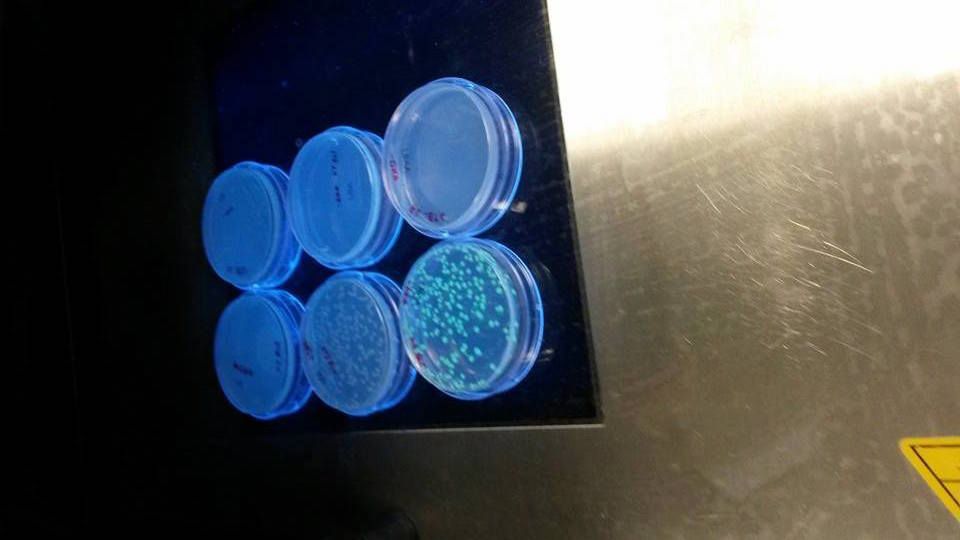
A badly taken photo of my lab results. Tiny spots on the agar plates are actually colonies of Escherichia coli.
Some plates contain ampicillin, which kills E. coli (up).
Some E. coli have been genetically modified, ie: fluoresce under UV light (down, right).
A simple but fun experiment for my first time in the lab!


*Present Day*
I guess relying on my gut instinct back then worked!
I... can't really imagine myself doing a computing degree.
And I do find the topics in the natural sciences interesting.
Not only that, I do suppose I can see myself working in this field when I grow up (because 21 year olds aren't adults yet).
And I look forward to it.
Oh gosh, this post was due last week. I've procrastinated so much, which means I'm normal and doing what every uni student is doing.


Listening to All Out of Love - Glee Cast


Uni work abound,
TK
Read More